2027 Social Security COLA: Official 3.6% Increase — Taxes, IRMAA, RMDs
The COLA percentage applies to your gross benefit. Taxes, IRMAA, and RMDs decide how much of it you actually spend.
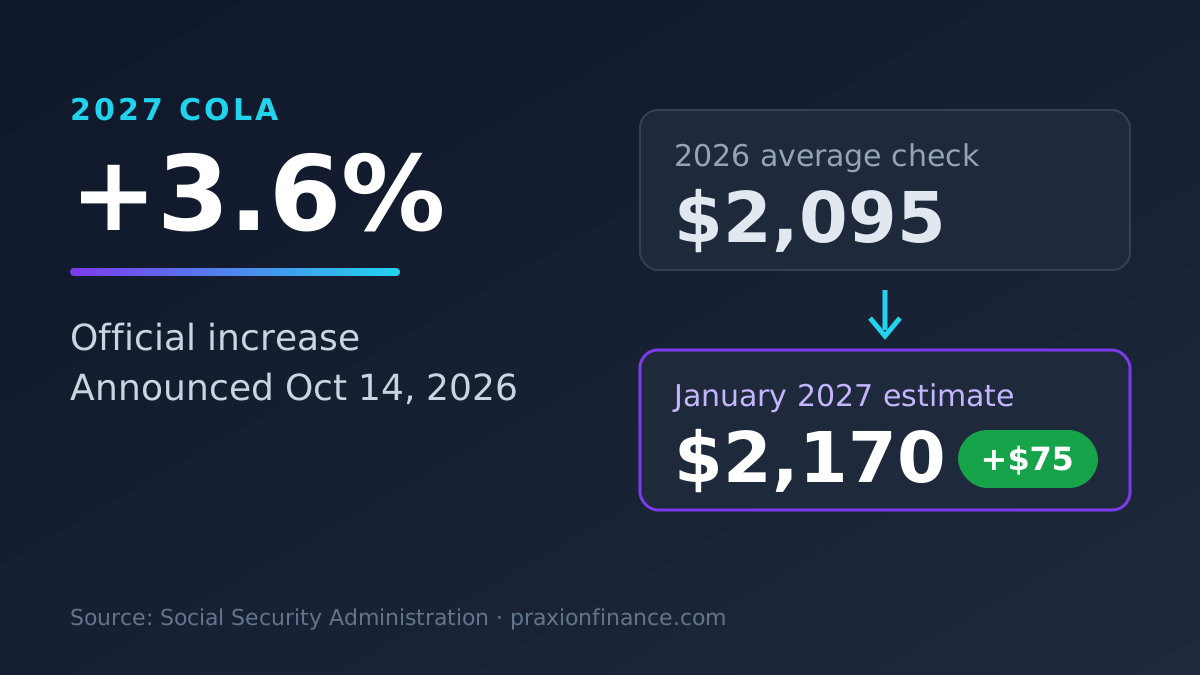
SSA has announced the official 2027 COLA: 3.6%
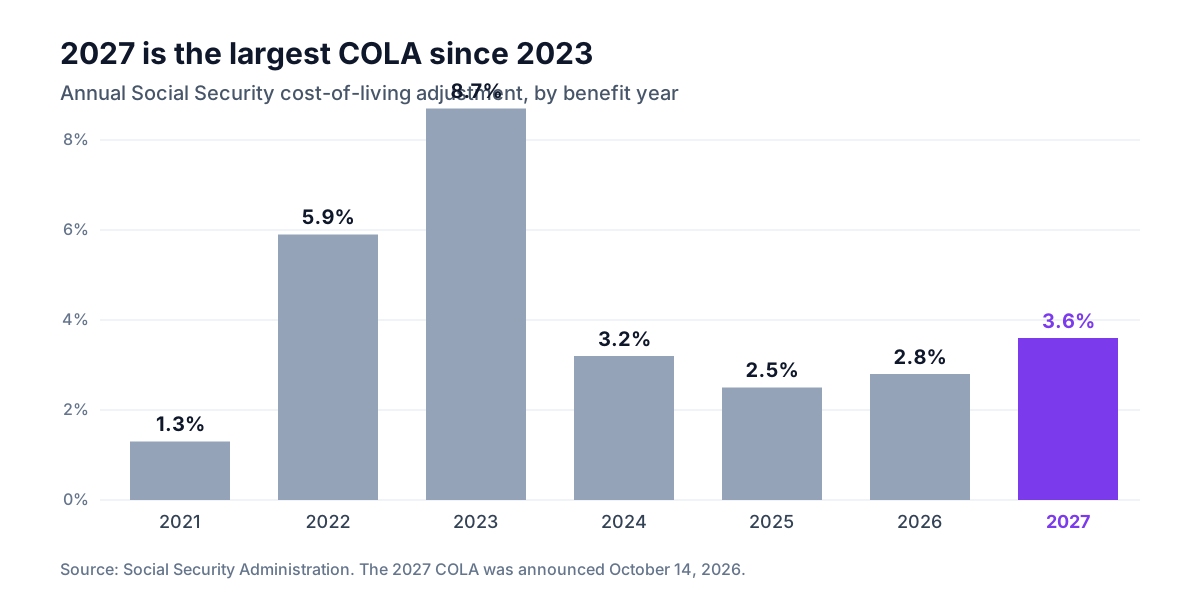
The Social Security Administration announced the official 3.6% adjustment on October 14, 2026. SSA estimates the average retired-worker benefit will rise from $2,095 to $2,170 a month, an increase of about $75. Social Security benefits with the adjustment begin in January 2027; increased SSI payments begin on December 31, 2026. See SSA's announcement and 2027 fact sheet.
What the official 2027 COLA means
The Social Security cost-of-living adjustment is a single percentage applied to every benefit, once a year. It is calculated from the Consumer Price Index for Urban Wage Earners and Clerical Workers (CPI-W) averaged over the third quarter — July, August, and September. There is no discretion in the formula itself. SSA has now completed that calculation for 2027.
At the official 3.6%, SSA estimates the average retired-worker benefit will move from $2,095 a month to about $2,170 — roughly $75 more per month, or $900 across a year. Your own raise scales with your benefit, so the percentage matters more than the dollar figure when you are modeling your own cash flow.
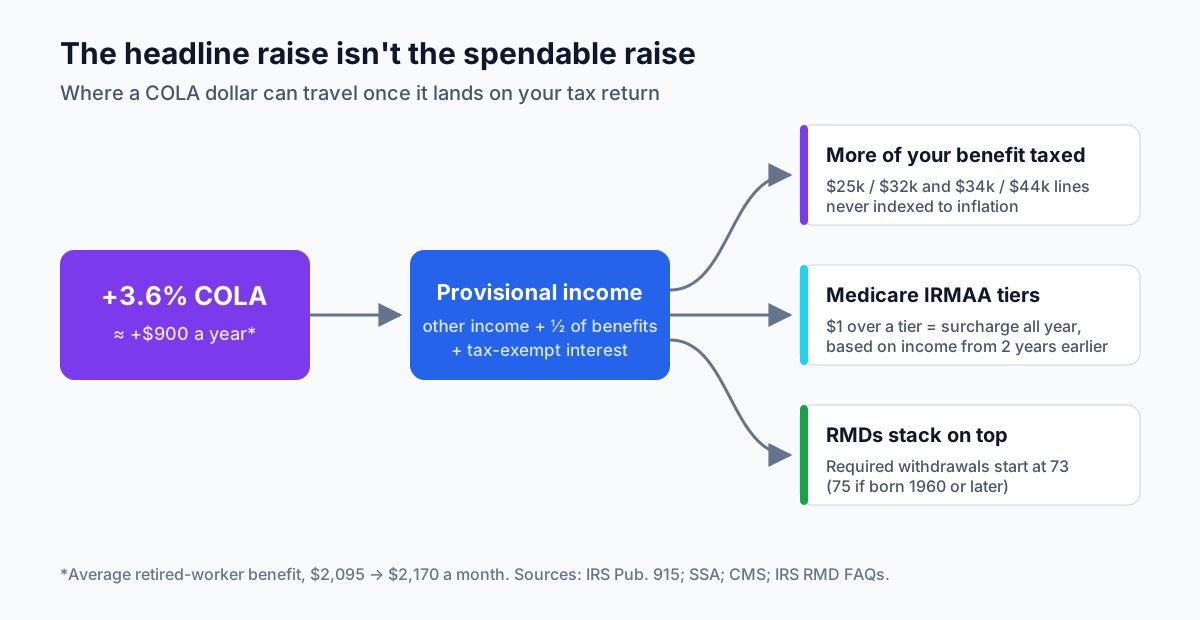
The headline raise isn't the spendable raise
A COLA percentage is applied to your gross benefit. Before the money reaches your checking account, three things can take a cut:
- Income tax on the benefit. A portion of Social Security becomes taxable once your combined income clears the thresholds. A raise pushes you closer to that line, and sometimes across it.
- Medicare premiums. Part B and Part D premiums are deducted from the check directly, before you see it.
- The earnings test. If you are still working, benefits above a work-year amount can be withheld and repaid.
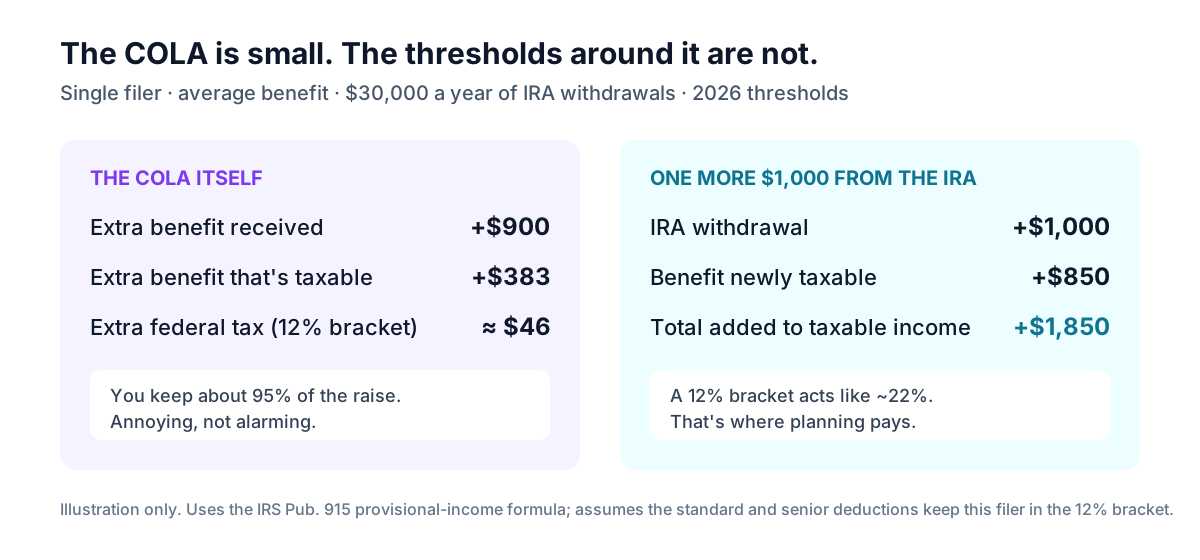
A worked example: the COLA versus one extra withdrawal
Take a single retiree receiving the average benefit, taking $30,000 a year from an IRA and nothing else. On that income the COLA raise of about $900 makes roughly $383 of benefit newly taxable. At a 12% marginal rate that is about $46 of federal tax — so the retiree keeps roughly 95% of the raise. Annoying, not alarming.
Now compare that with a single discretionary decision: withdrawing $1,000 more from the IRA in the same year to pay for a roof repair. Because the retiree is already above the upper taxable line, 85% of the incremental benefit is dragged into taxable income. That $1,000 withdrawal adds about $850 of newly taxable benefit — $1,850 of taxable income in total, from a $1,000 decision. A 12% marginal bracket behaves like something closer to 22%.
That asymmetry is the point. The COLA is largely a fait accompli; withdrawal decisions are not. If a fixed income has to absorb a surprise expense, the account the money comes from often costs more than the amount suggests.
The three thresholds that decide how much you keep
1. The Social Security taxable-income lines
For a single filer, combined income at or below $25,000 means no benefit is taxable; above $25,000 through $34,000, up to 50% can be taxable; and above $34,000, up to 85% can be taxable. For a married couple filing jointly, the corresponding lines are $32,000 and $44,000. The critical detail for COLA planning: these thresholds have not been indexed to inflation. The lower thresholds were set in 1983 and the upper thresholds in 1993; all have stayed nominally flat. Every raise therefore moves you fractionally closer to a line that is not moving.
This is why a COLA can feel smaller than its percentage. For a retiree well below the thresholds — the $32,000 married and $25,000 single lower lines — the full raise is yours and the point above mostly does not apply. For someone sitting just under the upper line, the same raise can be substantially taxable. The Social Security analyzer models where your own combined income falls.
2. Medicare IRMAA, two years later
IRMAA is an additional Medicare Part B and Part D premium triggered by income, and it works as a cliff rather than a phase-out. For 2026, the tier-one line is $109,000 MAGI for a single filer and $218,000 for a couple; crossing above the single-filer line adds about $1,164 a year in premiums. Unlike a marginal rate, the surcharge is a flat dollar amount applied for the full year — being $1 over the line costs the same as being $20,000 over it.
The timing matters more than the amount. Medicare premiums are calculated from MAGI two years earlier, so a COLA that lands in January 2027 shows up in your 2029 premium. The COLA itself is far too small to move a typical retiree across an IRMAA tier. It becomes relevant when it is one of several income decisions landing in the same year — a Roth conversion, a required distribution, a sale — that together cross the line.
3. Required minimum distributions
RMDs are the third input. Beginning at age 73 for those born 1951–1959, and age 75 for anyone born 1960 or later, traditional accounts force income you may not have wanted to take. Those forced withdrawals land in the same provisional-income calculation as the COLA and the same MAGI calculation as IRMAA. This is the specific collision to watch — our Social Security and RMD collision article covers it in depth.
How the timing actually works
The calendar matters here in a way that is easy to get backwards. Three dates drive everything:
- October 14, 2026 — the SSA publishes the official COLA, calculated from the third-quarter CPI-W that BLS releases the same day.
- January 2027 — Social Security benefits begin reflecting the new figure. SSI payments with the increase begin on December 31, 2026. The raise is not phased in; the full percentage applies at once.
- Two years later — any IRMAA consequence of that year's income, including this raise.
The percentage is now settled. The useful planning window is after the announcement and before year-end, when you may still be able to adjust surrounding income decisions that determine how much of the raise is taxable. The COLA itself is automatic; no application is required.
What the headline number can't tell you
The official 3.6% figure settles the percentage, but it does not settle what you will receive or keep. Worth keeping in mind:
- Your dollar increase is personal. SSA's $75 figure is an average, not a promise about your check. Your COLA notice will show your benefit and deductions.
- It does not restore purchasing power. A 3.6% raise offsets roughly 3.6% inflation. Retirees whose costs rose faster than that are still worse off than a year ago, which is the sentiment behind retirement drag.
- It is not a fix. The 89% of older Americans who told The Senior Citizens League's 2026 survey that the last COLA was too low are describing a structural adequacy question, not a forecasting one.
Legislation that would change the underlying formula — the Social Security 2100 Act, which indexes benefits to a different price index and adjusts the minimum benefit — has been reintroduced in Congress. Any such change would operate on future years, not retroactively on 2027.
2027 COLA FAQ
Quick answers to the questions we see most. COLA and average-benefit figures come from SSA's October 14, 2026 announcement and 2027 fact sheet.
- What is the official 2027 Social Security COLA?
- The Social Security Administration announced a 3.6% increase for 2027 on October 14, 2026. For the average retired worker, SSA estimates that this is about $75 more a month, taking the average monthly benefit from $2,095 to $2,170. Social Security beneficiaries begin receiving the increase in January 2027 payments; increased SSI payments begin December 31, 2026.
- When does the 2027 COLA take effect?
- Social Security beneficiaries begin receiving the increase in January 2027 payments; increased SSI payments begin December 31, 2026. The full percentage applies at once rather than phasing in across the year.
- Do you pay tax on a Social Security COLA?
- Sometimes. A COLA increases your benefit, and benefits above the taxable thresholds can become taxable. Those thresholds are not indexed to inflation, so a benefit that was untaxable one year can become partly taxable after a raise. On a typical retiree with about $30,000 of other income, an annual raise in this range makes roughly $383 of benefit newly taxable — about $46 of federal tax at a 12% marginal rate.
- Can a COLA push you into a higher Medicare IRMAA premium?
- It can, but not in the year the raise lands. IRMAA surcharges are based on modified adjusted gross income from two years earlier, so a 2027 COLA affects your 2029 Medicare premiums. The surcharge is a flat dollar amount applied for the full year once you cross a tier — in 2026, single-filer MAGI above $109,000 adds about $1,164 a year in additional Part B and Part D premiums.
- Why do my Social Security checks rise by less than the COLA percentage?
- Three mechanisms account for most of the gap: federal and state income tax on the portion of your benefit above the taxable thresholds, Medicare Part B and Part D premiums that are deducted from the check before you see it, and any benefit repayment required under the earnings test. The percentage increase is applied to your gross benefit, before all three deductions.
The number that matters for your plan is not the COLA percentage — it is the gap between the raise you receive and the raise you keep. Praxion models that gap against your own benefit, withdrawal schedule, and income sources, and shows where a small change in which account a dollar comes from is worth more than the COLA itself. Run it on your numbers. Praxion Finance is a decision-support tool, not a registered investment adviser.