Sequence-of-Returns Risk: Why Timing Often Matters More Than the Average
Two retirees with the same average return can end up in very different places. The order of good and bad years — especially in the first decade of retirement — drives the gap.
What Is Sequence of Returns Risk?
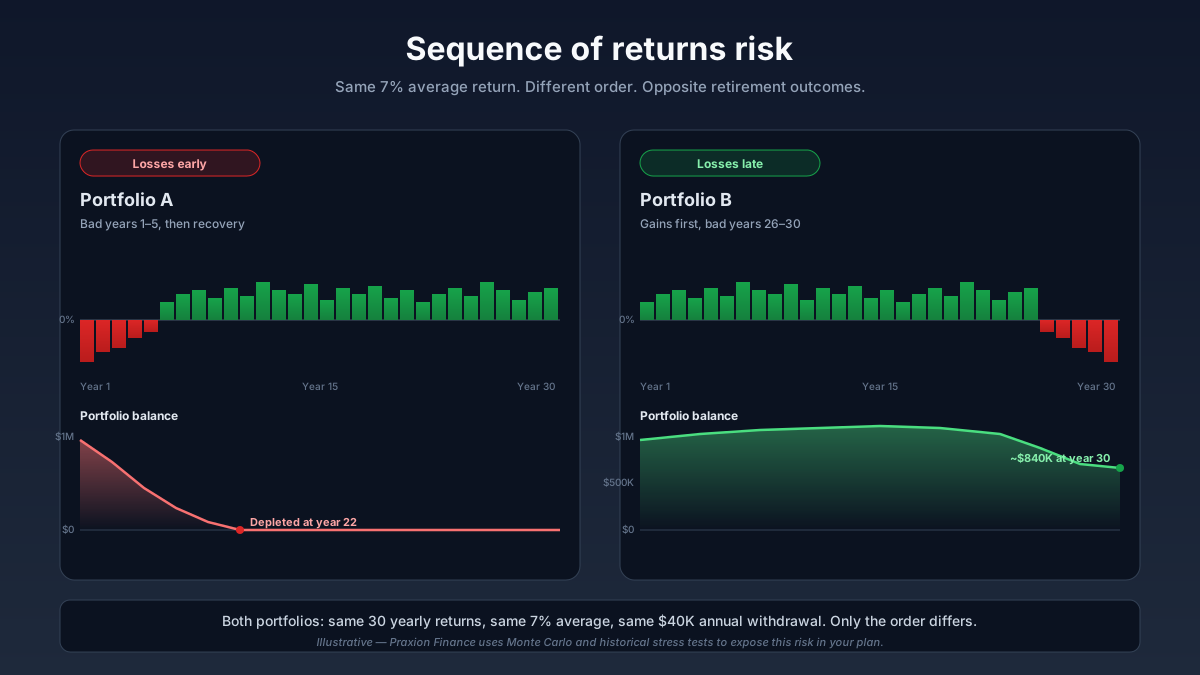
Sequence of returns risk is the danger that the order in which you experience market gains and losses matters more than the long-run average return. Two retirees can see the same average return over 30 years but end up with very different outcomes depending on whether bad years happened early or late.
When you're withdrawing from a portfolio, losses in the first years of retirement are especially damaging: you sell low to cover spending and lock in losses, leaving less invested to benefit from a later recovery. The same losses occurring later, when the portfolio is smaller or you have fewer years left, can be less destructive.
Why It Matters for Retirement
Simple retirement calculators often assume a constant return every year (e.g. 6% or 7%). That ignores volatility and sequence risk. In reality, markets go up and down. If you hit a bear market or a string of bad years right when you start taking withdrawals, your plan can fail even if the "average" return over your retirement looks fine.
This is one of the main reasons financial planners stress-test plans with Monte Carlo simulationsand historical stress tests: they run thousands of different return sequences to see how often your plan would have succeeded, rather than relying on a single average.
How to Mitigate Sequence of Returns Risk
- Hold 1–2 years of spending in cash or short-term bonds so you don't have to sell stocks in a downturn to cover expenses.
- Use dynamic withdrawal strategies that reduce spending when the portfolio drops, instead of rigidly increasing by inflation every year.
- Run Monte Carlo and stress tests to see the probability your plan survives many different return sequences.
- Consider timing of Social Security and other income so you rely less on the portfolio in the riskiest early years.
How Praxion Finance Models It
Praxion Finance uses Monte Carlo simulation to run thousands of market scenarios with varying returns each year. That captures sequence of returns risk instead of assuming one smooth return. Our Monte Carlo Retirement Simulator and Historical Stress Test let you see how your plan holds up under different sequences. For more on the methodology, see Monte Carlo Retirement Simulations and Retirement Hardship Detection.
Learn More
Retirement Income Planner (public scenario lab) · Learning Center · The 4% Rule Explained · Why Most Projections Are Unrealistic · Am I on Track to Retire?